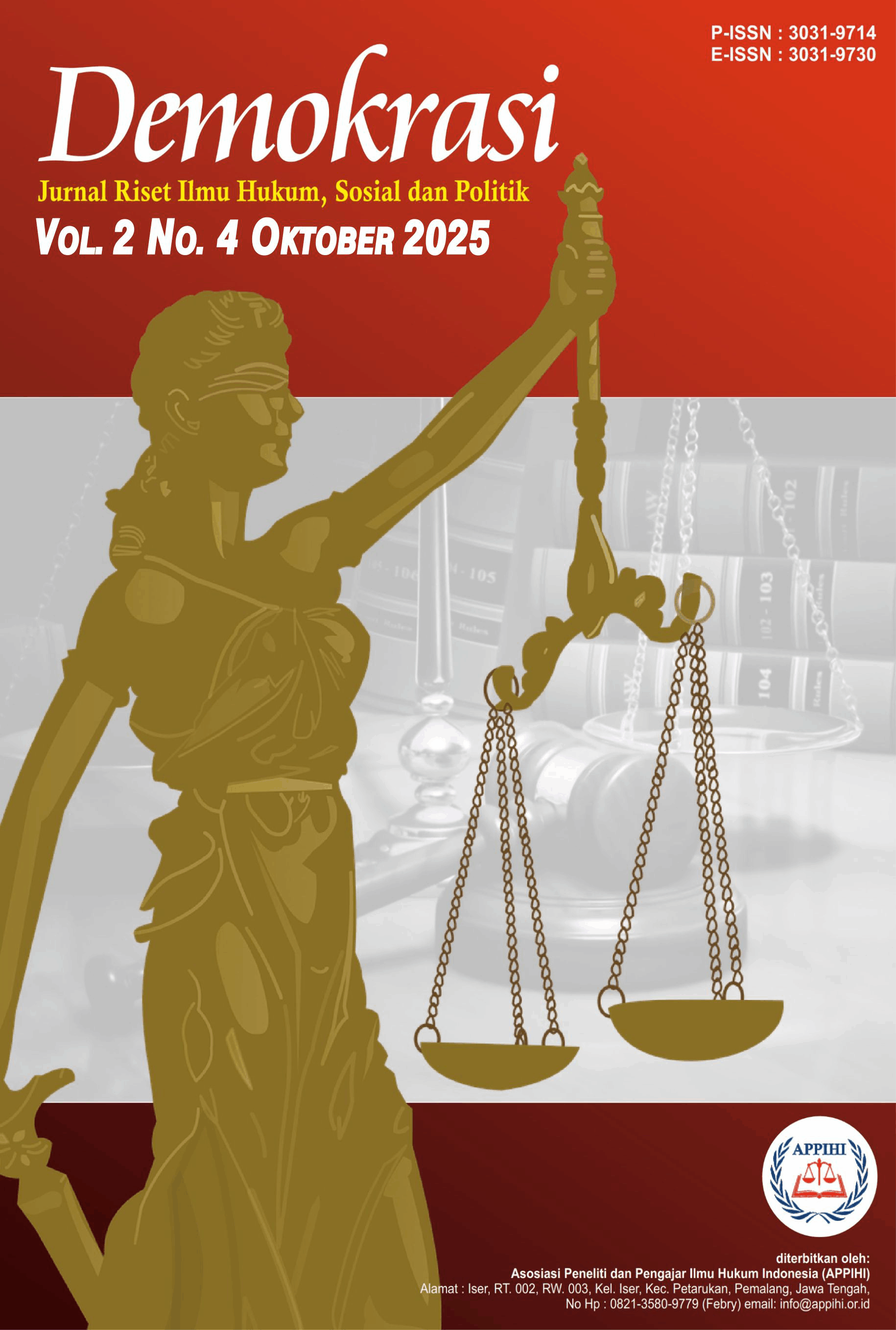
Optimasi Dana Wakaf Produktif dengan MATLAB
Studi pada Badan Wakaf UII Yogyakarta
DOI:
https://doi.org/10.62383/demokrasi.v2i4.1270Keywords:
Islamic economics, MATLAB, Optimization, Productive waqf, YogyakartaAbstract
This study discusses the optimization of the allocation of productive waqf funds using MATLAB through a case study on the Waqf Board of the Islamic University of Indonesia (UII) Yogyakarta. Productive waqf has an important role in supporting socio-economic empowerment, but its management often faces challenges in determining the efficient distribution of funds. The purpose of this research is to develop a mathematical model to optimize the allocation of waqf funds in various sectors such as education, health, micro enterprises, and social programs. The research method uses a quantitative approach with optimization techniques implemented in MATLAB to simulate various fund distribution scenarios. The results of the study show that the optimization model is able to provide a more effective distribution of waqf funds compared to the actual allocation pattern, thereby increasing efficiency and impact on community welfare. Thus, the use of MATLAB has been proven to help waqf institutions in formulating accurate data-based decisions and mathematical models. In addition, this study emphasizes that the application of modern computing technology can strengthen the role of waqf as an instrument of sustainable social development. The implications of this study show that the integration of mathematical modeling with modern computing tools can be an important strategy for Islamic philanthropic institutions in maximizing the potential of productive waqf, especially in Yogyakarta. This research also contributes to the development of Islamic economic literature, offers practical recommendations for waqf managers, and shows the application of MATLAB as a tool in economic decision-making. With this approach, productive waqf is expected to provide wider and sustainable benefits for the community, as well as be an inspiration for other waqf institutions in Indonesia to adopt a similar strategy.
Downloads
References
Ahmad, A. (2022). The role of Islamic social finance in sustainable development goals: Evidence from Indonesia. Journal of Islamic Monetary Economics and Finance, 8(1), 23–40. https://doi.org/10.21098/jimf.v8i1.1442
Alam, M. N., & Rabbani, M. R. (2021). Waqf-based social finance: A proposed model for COVID-19 medical relief. Journal of Islamic Accounting and Business Research, 12(3), 441–456. https://doi.org/10.1108/JIABR-07-2020-0225
Aziz, M., & Yusof, M. (2020). Optimizing waqf distribution using linear programming approach. International Journal of Islamic and Middle Eastern Finance and Management, 13(2), 345–361. https://doi.org/10.1108/IMEFM-06-2018-0187
Badan Wakaf UII. (2024). Laporan tahunan pengelolaan wakaf produktif 2024. Yogyakarta: Badan Wakaf Universitas Islam Indonesia.
Chapra, M. U. (2019). Islamic economics: What it is and how it developed. Cheltenham: Edward Elgar.
Fauzia, A. (2021). Islamic philanthropy in contemporary Indonesia: A social movement perspective. Asian Journal of Social Science, 49(1-2), 74–97. https://doi.org/10.1163/15685314-bja10025
Hasan, R., & Siraj, S. A. (2020). Developing a waqf-based model for entrepreneurship development in Malaysia. Journal of Islamic Marketing, 11(4), 913–931. https://doi.org/10.1108/JIMA-06-2018-0119
Huda, M., Rini, N., & Anshori, M. (2021). Optimization of zakat and waqf funds through Islamic financial technology. International Journal of Zakat, 6(2), 111–128. https://doi.org/10.37706/ijaz.v6i2.244
Kahf, M. (2018). Waqf: An Islamic instrument of poverty alleviation. Jeddah: IRTI.
Kusuma, D. (2023). Linear programming application in Islamic social finance distribution. In Proceedings of the 4th International Conference on Islamic Economics and Finance (pp. 87–95). Yogyakarta: UII Press.
Mahfudz, T., & Purnamasari, D. (2022). Pengelolaan wakaf produktif dalam perspektif ekonomi Islam. Jurnal Ekonomi Syariah Indonesia, 12(1), 45–58. https://doi.org/10.20885/jesi.vol12.iss1.art4
Nurhayati, S., & Wasilah. (2021). Akuntansi syariah di Indonesia (6th ed.). Jakarta: Salemba Empat.
Omar, M., & Rahman, A. (2019). The effectiveness of waqf in community empowerment: Evidence from Southeast Asia. International Journal of Ethics and Systems, 35(1), 139–154. https://doi.org/10.1108/IJOES-11-2018-0153
Prasetyo, A., & Lestari, W. (2023). Model optimasi dana filantropi Islam dengan MATLAB. Jurnal Matematika dan Aplikasi, 22(2), 133–146. https://doi.org/10.12962/jma.v22i2.6543
Rahman, A. A., & Yusof, S. (2020). Modeling cash waqf for economic development. Journal of Islamic Economics, Banking and Finance, 16(4), 59–78. https://doi.org/10.12816/0056492
Rohman, F., & Maulana, R. (2022). Peran wakaf produktif dalam pembangunan ekonomi umat. Jurnal Ilmiah Ekonomi Islam, 8(3), 225–238. https://doi.org/10.29040/jiei.v8i3.4230
Rusydiana, A. S., & Devi, A. (2019). Analisis optimasi distribusi zakat dengan pendekatan goal programming. Al-Iqtishad: Journal of Islamic Economics, 11(2), 391–408. https://doi.org/10.15408/aiq.v11i2.11029
Suryanto, T., & Putri, F. (2021). Waqf fund management and its role in sustainable economic development. Cogent Economics & Finance, 9(1), 1–15. https://doi.org/10.1080/23322039.2021.1902504
Umar, A., & Ali, H. (2022). Digital transformation of waqf management: Opportunities and challenges. International Journal of Islamic Business and Economics, 6(2), 155–170. https://doi.org/10.28918/ijibec.v6i2.5321
Zainuddin, I., & Rasyid, A. (2023). Wakaf produktif sebagai instrumen pengentasan kemiskinan di Indonesia. Jurnal Ekonomi dan Pembangunan Islam, 13(1), 77–92. https://doi.org/10.24235/jepi.v13i1.6912
Downloads
Published
How to Cite
Issue
Section
License
Copyright (c) 2025 Demokrasi: Jurnal Riset Ilmu Hukum, Sosial dan Politik

This work is licensed under a Creative Commons Attribution-ShareAlike 4.0 International License.