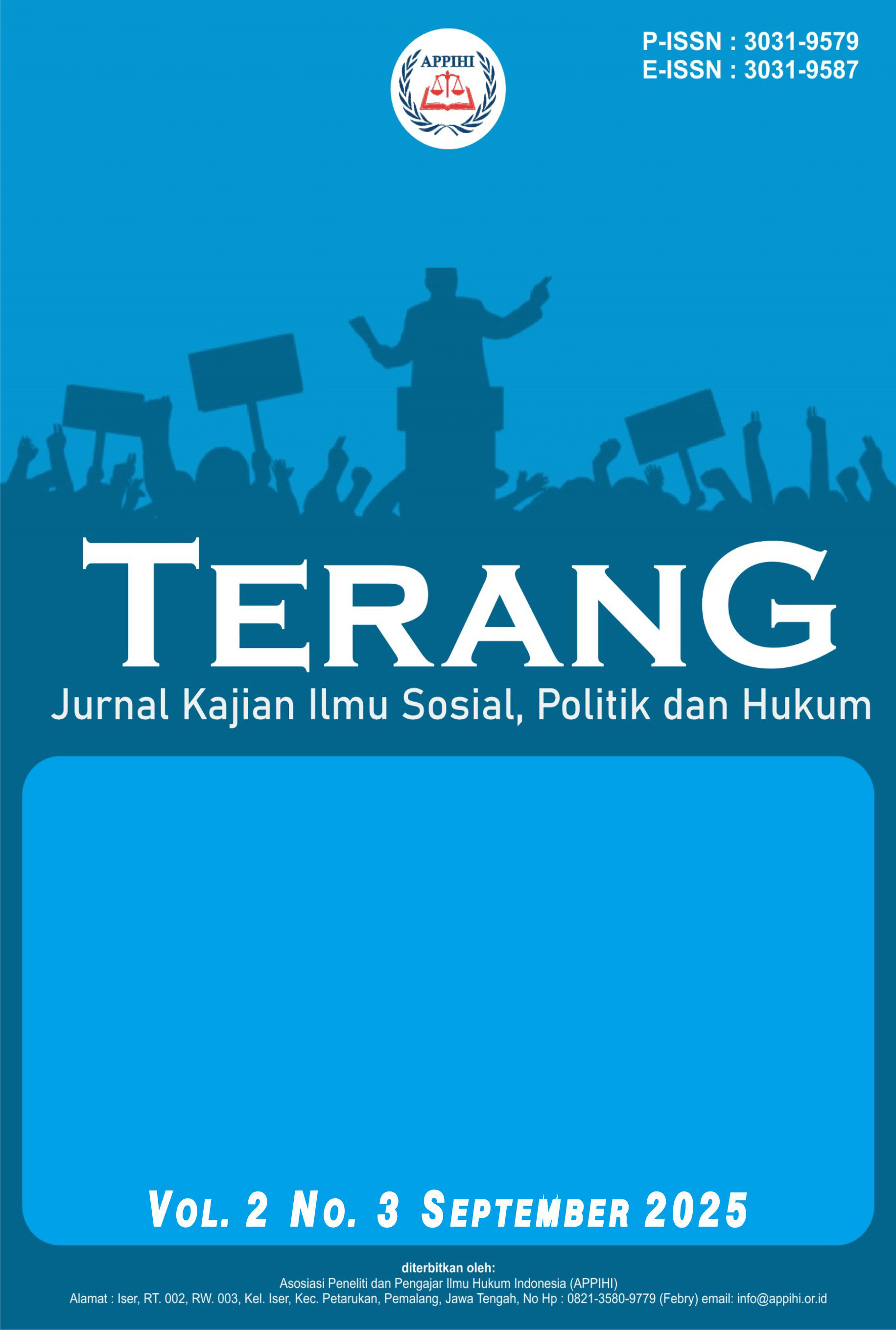
Konstitusionalisme Digital: Membangun Kerangka Hukum untuk Tata Kelola Penyelenggaraan Negara di Era Teknologi
DOI:
https://doi.org/10.62383/terang.v2i3.1286Keywords:
Data Security, Digital Constitutionalism, Information Access, Privacy, State GovernanceAbstract
In an ever-evolving digital era, the protection of human rights has become an increasingly complex and urgent challenge. Digital constitutionalism emerges as an innovative and necessary framework to address this challenge, integrating human rights principles into technology-based state governance. This journal aims to explore how digital constitutionalism can strengthen the protection of human rights while analyzing the challenges and opportunities faced in its implementation. Through a qualitative analysis approach, this research collects and analyzes relevant literature as well as case studies from various countries that have adopted the principles of digital constitutionalism. The findings indicate that while digital constitutionalism offers significant potential to enhance human rights protection, substantial challenges such as privacy, data security, and access to information still need to be addressed. Furthermore, the role of government, civil society, and the private sector is crucial in creating an environment that supports the protection of human rights in the digital space. The conclusion of this research emphasizes the importance of cross-sector collaboration to ensure that human rights are not only constitutionally recognized but also effectively protected in practice. Thus, digital constitutionalism serves not only as a tool for safeguarding human rights but also as a driver for creating a more transparent, accountable, and responsive governance system to meet the needs of society in the digital era.
Downloads
References
Abadi, M. T. (2022). Ekonomi moneter: Sebuah pengantar.
Apriani, H., & Putri, R. (2021). Pengaruh jumlah uang beredar terhadap pertumbuhan ekonomi di Indonesia. Jurnal Ekonomi Pembangunan, 12(1), 25-34.
Astiyah, S. (2009). Inflasi. Jakarta: Pusat Pendidikan dan Studi Kebanksentralan (PPSK), Bank Indonesia.
Boediono. (2016). Teori pertumbuhan ekonomi. Yogyakarta: BPFE.
Cohen, J. E. (2020). Between truth and power: The legal constructions of informational capitalism. Oxford University Press. https://doi.org/10.1093/oso/9780190246693.001.0001
Creswell, J. W. (2014). Research design: Qualitative, quantitative, and mixed methods approaches (4th ed.). Sage Publications.
Dwiantoro, D. (2004). Analisis determinan inflasi di Indonesia dengan Engel-Granger error correction model. Jurnal Ekonomi dan Manajemen, 2(1), 45-60.
Fisher, I. (1911). The purchasing power of money. Macmillan.
Ghozali, I. (2018). Aplikasi analisis multivariate dengan program IBM SPSS 25. Badan Penerbit Universitas Diponegoro.
Halim, M. R. (2021). Kewenangan eksekutif dalam pengambilan keputusan di Indonesia: Analisis konstitusi dan praktik. Penerbit Universitas Indonesia.
Julian. (2017). Uang dalam pandangan Islam. Jurnal Ekonomi dan Keuangan Syariah, 3(2), 217-230. https://doi.org/10.29313/amwaluna.v1i2.2583
Keynes, J. M. (1936). The general theory of employment, interest, and money. Macmillan.
Komalasari, A., Fatmasari, D., & Suharto, T. (2024). Pengaruh jumlah uang beredar, tingkat inflasi, dan suku bunga terhadap pertumbuhan ekonomi di Indonesia. Jurnal Ekonomi Bisnis Antartika, 2(1), 1-10. https://doi.org/10.70052/jeba.v2i1.245
Lubis, I. F. (2017). Analisis antara inflasi dan pertumbuhan ekonomi: Kasus Indonesia. QE Journal, 3(1), 44-55. https://doi.org/10.24114/qej.v3i1.17443
Muhammad Khaidir Kahfi Natsir, & Ayub Jose Luhut Parulian Simanjuntak. (2024). Pengelolaan taman wisata alam ditinjau dari aspek hukum lingkungan. Eksekusi: Jurnal Ilmu Hukum dan Administrasi Negara, 2(4), 413-425. https://doi.org/10.55606/eksekusi.v2i4.1792
Muhammad Khaidir Kahfi Natsir, & Nurul Chaerani Nur. (2024). Sinergi antara prinsip konstitusi hijau dan praktik demokrasi hijau: Implikasi hukum untuk keberlanjutan lingkungan. Amandemen: Jurnal Ilmu Pertahanan, Politik dan Hukum Indonesia, 1(4), 196-209. https://doi.org/10.62383/amandemen.v1i4.821
Muhammad Khaidir Kahfi Natsir. (2024). Mewujudkan perlindungan anak yang berkelanjutan: Perspektif hak asasi manusia dalam pembentukan Undang-Undang Nomor 17 Tahun 2016. Jurnal Juris Humanity, 3(2), 39-49. https://doi.org/10.37631/jrkhm.v3i2.65
Muhammad Khaidir Kahfi Natsir. (2025). Analisis otonomi daerah berdasarkan Undang-Undang Nomor 23 Tahun 2014 tentang pemerintahan daerah. Jurnal Hukum dan Sosial Politik, 3(1), 141-162. https://doi.org/10.59581/jhsp-widyakarya.v3i1.4718
Nugroho, A. S. (2022). Komunikasi krisis dan keterlibatan publik: Studi kasus penanganan pandemi COVID-19 di Indonesia. Penerbit Andi.
Nugroho, A. S. (2022). Perlindungan data pribadi dalam konteks digital: Tantangan dan peluang. Jurnal Komunikasi dan Media, 15(1), 45-60.
O'Neil, C. (2016). Weapons of math destruction: How big data increases inequality and threatens democracy. Crown Publishing Group.
Smith, J. (2015). Accountability in electoral processes: A comparative analysis. Routledge.
Tanaka, H. (2020). Partisipasi publik dalam pengawasan pemilu: Studi kasus di Jepang. Jurnal Politik dan Pemerintahan, 10(3), 210-225.
Tanaka, H. (2020). Public participation in electoral oversight: Lessons from Japan. Penerbit Universitas Tokyo.
Zuboff, S. (2019). Big other: Surveillance capitalism and the challenge of the digital age. Journal of Information Technology, 34(1), 75-89.
Downloads
Published
How to Cite
Issue
Section
License
Copyright (c) 2025 Terang : Jurnal Kajian Ilmu Sosial, Politik dan Hukum

This work is licensed under a Creative Commons Attribution-ShareAlike 4.0 International License.